The WordPress coreCoreCore is the set of software required to run WordPress. The Core Development Team builds WordPress. development team builds WordPress! Follow this site forย general updates, status reports, and the occasional code debate. Thereโs lots of ways to contribute:
Found a bugbugA bug is an error or unexpected result. Performance improvements, code optimization, and are considered enhancements, not defects. After feature freeze, only bugs are dealt with, with regressions (adverse changes from the previous version) being the highest priority.?Create a ticket in the bug tracker.
Over the last year, Phase 3 of the GutenbergGutenbergThe Gutenberg project is the new Editor Interface for WordPress. The editor improves the process and experience of creating new content, making writing rich content much simpler. It uses โblocksโ to add richness rather than shortcodes, custom HTML etc.
https://wordpress.org/gutenberg/ roadmap has begun to take form and with it comes a need for an update around whatโs been done, how to follow along, and what to expect going forward. This post seeks to provide answers at a high level view of these questions. As a reminder Phase 3 is centered around fostering seamless collaboration, tying together the user experience, and streamlining the content management flows to improve the way creators and teams work together within WordPress. As work progresses, feedback is needed and welcomed to ensure broader adoption.
Real-time collaboration
Over the last few months, Kevin Jahns, the author of Yjs, a popular framework for building collaborative applications has been sponsored by Automattic to work on real-time collaboration, after an initial experiment landed. He kicked off his efforts with some research and dialogue in this discussion issue. More recently, heโs pulled together some prototypes ahead of sharing a full proposal for how to proceed. Right now, consider this work as being in a strong experimental stage without a final approach. The next step is to get the initial approach into a PR for folks to give feedback on and discuss openly.ย
Below is a demo showing syncing content only relying on HTTPHTTPHTTP is an acronym for Hyper Text Transfer Protocol. HTTP is the underlying protocol used by the World Wide Web and this protocol defines how messages are formatted and transmitted, and what actions Web servers and browsers should take in response to various commands. APIs with the autosave interval set to 3 seconds. Because it relies on HTTP APIs, this demo would work on all WordPress instances:
Going a step further, you can see more demos in a recent update including adding y-webrtc into the experience to show how real time collaboration would work for users who can establish a peer-to-peer WebRTC connection.
An initial experiment for block-level inline comments landed with Gutenberg 19.6, breaking ground on the first of many async collaboration upgrades. At this point, another iteration on this initial feature is already planned and underway to refine the current experience further. If youโd like to help test and shape the feature further, stay tuned for a dedicated call for testing or start testing today with this WordPress Playground instance and open issues in the Gutenberg GitHubGitHubGitHub is a website that offers online implementation of git repositories that can easily be shared, copied and modified by other developers. Public repositories are free to host, private repositories require a paid subscription. GitHub introduced the concept of the โpull requestโ where code changes done in branches by contributors can be reviewed and discussed before being merged by the repository owner. https://github.com/ repository. The aim is to get early feedback and quickly iterate in order to land this new feature in an upcoming major WordPress release. Below is a look at the near term design slated to be shipped next with visuals for adding a comment, leaving a comment, toggling to see resolved comments, and the resulting view when looking at resolved comments:
As a next step of the initial development of DataViews, the more recent DataForm API was later introduced in Gutenberg 18.8 with the aim to reduce expected duplication to create forms in Data Views. Work has continued progressively from there with DataViews and DataForm components influencing each otherโs development. You can view each in their respective Storybook views: DataViews and DataForm.
Both of these components have been created with extensibility at the heart of everything being built! For now, pluginPluginA plugin is a piece of software containing a group of functions that can be added to a WordPress website. They can extend functionality or add new features to your WordPress websites. WordPress plugins are written in the PHP programming language and integrate seamlessly with WordPress. These can be free in the WordPress.org Plugin Directory https://wordpress.org/plugins/ or can be cost-based plugin from a third-party. and agency developers can already start using the DataViews component for their WordPress customizations with two different Developer Blogblog(versus network, site) tutorials to get you started: Using Data Views to display and interact with data in plugins and Actions from Data Views: Adding images to the Media Library. If you want to go on a deeper dive, watch a recent hallway hangout that goes through both of these components with folks actively working on them. Expect a continual focus on extensibility as these components evolve. Below is a look at how DataViews comes together with the DataForm work with an easy option to quick edit within oneโs pages:
โWhatโs new in GutenbergGutenbergThe Gutenberg project is the new Editor Interface for WordPress. The editor improves the process and experience of creating new content, making writing rich content much simpler. It uses โblocksโ to add richness rather than shortcodes, custom HTML etc.
https://wordpress.org/gutenberg/โฆโ posts (labeled with the #gutenberg-newtagtagA directory in Subversion. WordPress uses tags to store a single snapshot of a version (3.6, 3.6.1, etc.), the common convention of tags in version control systems. (Not to be confused with post tags.)) are posted following every Gutenberg release on a biweekly basis, showcasing new features included in each release. As a reminder, hereโs an overview of different ways to keep up with Gutenberg and the Editor.
This release focuses on stabilizing existing features but also brings some improvements to the general UIUIUser interface and the zooming editing experience, with 116 PRs from 47 contributors.
Gutenberg 19.5 most notable enhancements circle around the zooming out -and in!- experience.
For instance, the Edit button from the zoom-out toolbar has been replaced to favor more friendly interactions and reduce visual overload. Apart from the top toolbar toggle for this mode and the ability to double-click to zoom back, which were introduced in recent releases, a new Enter keyboard interaction brings you back in as well.
With all these easy ways to exit the zoomed-out view, the editor will now zoom out when showing the pattern inserter, a use case where showing a general view of your page/site matters more than focusing on individual blocks.
Moreover, this release brings many bugbugA bug is an error or unexpected result. Performance improvements, code optimization, and are considered enhancements, not defects. After feature freeze, only bugs are dealt with, with regressions (adverse changes from the previous version) being the highest priority. fixes to make this feature as stable and solid as possible for the upcoming WordPress 6.7. And the zooming transition is now smoother, too!
Other notable changes
The editor modes writing and editing, as introduced in Gutenberg 19.4, can now be set as a user preference so that the selected mode persists even after exiting the editor or reloading the page.
BlockBlockBlock is the abstract term used to describe units of markup that, composed together, form the content or layout of a webpage using the WordPress editor. The idea combines concepts of what in the past may have achieved with shortcodes, custom HTML, and embed discovery into a single consistent API and user experience. bindings can now be used on the widgets screen, too. Check out the original pull request to learn more, or keep tuned to the Developer Blogblog(versus network, site) for more comprehensive examples!
Try zooming out when selecting the patterns tab in the inserter. (65785)
Update/replace edit button with enter on selection. (65760)
Global Styles
Improve navigation logic for revisionsRevisionsThe WordPress revisions system stores a record of each saved draft or published update. The revision system allows you to see what changes were made in each revision by dragging a slider (or using the Next/Previous buttons). The display indicates what has changed in each revision. screen. (65946)
Block bindings
Register bindings sources in widgets screens. (65937)
Position scaled htmlHTMLHyperText Markup Language. The semantic scripting language primarily used for outputting content in web browsers. within available container space. (66034)
Restores setting zoom out mode to useZoomOut hook. (65999)
Use consistent canvas frame spacing on device preview and zoom out. (66018)
Code block: Set LTR direction for RTL languages. (65891)
Fix duotone on parallax/repeated featured imageFeatured imageA featured image is the main image used on your blog archive page and is pulled when the post or page is shared on social media. The image can be used to display in widget areas on your site or in a summary list of posts. cover blocks. (65929)
Fix: Embed Block: Match HTML in the editor and frontend. (65478)
Hide grid visualizer when grid is template locked or block editing mode is not default. (66065)
Post Content Block: Fix conflictconflictA conflict occurs when a patch changes code that was modified after the patch was created. These patches are considered stale, and will require a refresh of the changes before it can be applied, or the conflicts will need to be resolved. between clearFix and focus ring in the editor. (65364)
Post Content: Fix display of block support styles. (66003)
Post Terms: Fix fatal error when โget_the_term_listโ returns โWP_Errorโ. (65848)
Query LoopLoopThe Loop is PHP code used by WordPress to display posts. Using The Loop, WordPress processes each post to be displayed on the current page, and formats it according to how it matches specified criteria within The Loop tags. Any HTML or PHP code in the Loop will be processed on each post. https://codex.wordpress.org/The_Loop: Fix isControlAllowed and isTemplate combined logic. (65984)
Interactivity APIAPIAn API or Application Programming Interface is a software intermediary that allows programs to interact with each other and share data in limited, clearly defined ways.
Improvements to the experimental full-page navigation. (64067)
Site Editor
Fix site editor back button visual regressions. (66166)
Zoom Out: When double clicking a template while zoomed out , reset zoom level instead of showing dialog. (65963)
CSSCSSCascading Style Sheets. & Styling
Editor: Prevent wrapping text when showing icon labels in headerHeaderThe header of your site is typically the first thing people will experience. The masthead or header art located across the top of your page is part of the look and feel of your website. It can influence a visitorโs opinion about your content and you/ your organizationโs brand. It may also look different on different screen sizes.. (66038)
Add argument with post ID to the editor.savePost hook. (66165)
AccessibilityAccessibilityAccessibility (commonly shortened to a11y) refers to the design of products, devices, services, or environments for people with disabilities. The concept of accessible design ensures both โdirect accessโ (i.e. unassisted) and โindirect accessโ meaning compatibility with a personโs assistive technology (for example, computer screen readers). (https://en.wikipedia.org/wiki/Accessibility)
Post Editor
Fix metaMetaMeta is a term that refers to the inside workings of a group. For us, this is the team that works on internal WordPress sites like WordCamp Central and Make WordPress. boxes accessibility. (65466)
Fix navigate regions shortcuts on the back button WP logo slot. (63611)
Improve PostURL terminology and accessibility. (63669)
Match visible label of search inputs with their actual label. (65458)
Components
Fixed : Modal dialog: Small improvement for elementShouldBeHidden. (65941)
ToggleGroupControl: Donโt autoselect option on first group focus. (65892)
Tooltip: Add aria-describedby to anchor only if not redundant. (65989)
Typography
Revert the โManage fontsโ button in Global Styles. (66107)
Performance
Interactivity API
Leverage scheduler.yield in splitTask when available. (66001)
Theme JSONJSONJSON, or JavaScript Object Notation, is a minimal, readable format for structuring data. It is used primarily to transmit data between a server and web application, as an alternative to XML.
BackportbackportA port is when code from one branch (or trunk) is merged into another branch or trunk. Some changes in WordPress point releases are the result of backporting code from trunk to the release branch. from WordPress CoreCoreCore is the set of software required to run WordPress. The Core Development Team builds WordPress.: improve performance of WP_Theme_JSON::Merge when merging background styles. (66002)
Contrast notes: Update 4.6:1 note with further context. (66168)
Data-basics/4-building-a-create-page-form is ready now. (66100)
Docs: env: Expand examples of path syntax. (65972)
Updated several typos in client-assets.php file. (66084)
Use correct label in PHPPHPThe web scripting language in which WordPress is primarily architected. WordPress requires PHP 7.4 or higher Backport documentation. (65908)
add: Usage examples in core editor documentation. (63768)
Consistent with block-development-examples data-basics-59c8f8. (65995)
Code Quality
.screen-reader-text CSS update for responsive-block-control style.scss. (66145)
Fix components coding standards in Zoom Out Toolbar. (65858)
Gutenberg pluginPluginA plugin is a piece of software containing a group of functions that can be added to a WordPress website. They can extend functionality or add new features to your WordPress websites. WordPress plugins are written in the PHP programming language and integrate seamlessly with WordPress. These can be free in the WordPress.org Plugin Directory https://wordpress.org/plugins/ or can be cost-based plugin from a third-party.
Correct capabilitycapabilityAย capabilityย is permission to perform one or more types of task. Checking if a user has a capability is performed by the current_user_can function. Each user of a WordPress site might have some permissions but not others, depending on theirย role. For example, users who have the Author role usually have permission to edit their own posts (the โedit_postsโ capability), but not permission to edit other usersโ posts (the โedit_others_postsโ capability). for the Experiments page. (66118)
Tools
Testing
Add an end-to-end test to check the interactions in write mode. (65819)
Composite: Add legacy unit tests to stable version. (65952)
WordPress 6.7 Beta 2ย was released on October 8. Thank you to everyone who contributed to this release and attended the release party! There isย a helpful guide hereย on how to help test this release.
During the meeting, @peterwilsoncc and @marybaum updated the Playground link in the news post to correctly load WP 6.7 BetaBetaA pre-release of software that is given out to a large group of users to trial under real conditions. Beta versions have gone through alpha testing in-house and are generally fairly close in look, feel and function to the final product; however, design changes often occur as part of the process. 2.
Forthcoming releases
Nextย major releasemajor releaseA release, identified by the first two numbers (3.6), which is the focus of a full release cycle and feature development. WordPress uses decimaling count for major release versions, so 2.8, 2.9, 3.0, and 3.1 are sequential and comparable in scope.: 6.7
@peterwilsoncc shared that thereโs been a change in the release squad. @get_dave will be replacing @noisysocks in the co-editor tech lead role. Kai will remain as the other editor tech lead. The WP 6.7. release page will be updated to reflect the addition of @get_dave while keeping @noisysocks as a listed co-lead to acknowledge his contributions to this release.
Next maintenance release
There are no maintenance releases planned at this time.
This week, continuing to triagetriageThe act of evaluating and sorting bug reports, in order to decide priority, severity, and other factors. tickets reported against 6.6.x (ieย Version). Then can do a 6.6.3 bugbugA bug is an error or unexpected result. Performance improvements, code optimization, and are considered enhancements, not defects. After feature freeze, only bugs are dealt with, with regressions (adverse changes from the previous version) being the highest priority. scrub inย #coreย to help with assessment and resolutions.
Nextย GutenbergGutenbergThe Gutenberg project is the new Editor Interface for WordPress. The editor improves the process and experience of creating new content, making writing rich content much simpler. It uses โblocksโ to add richness rather than shortcodes, custom HTML etc.
https://wordpress.org/gutenberg/ย release: 19.4
The next Gutenberg release will be 19.4, scheduled for October 9, and will includeย the following issues.
Discussion
There were no discussion topics raised this week, so @joemcgill shared the following issues that were raised in the #6-7-release-leads channel:
A reminder that there are a number of bugs on theย 6.7 Editor project boardย that need addressing. Specifically, the new Zoom Out Mode has many issues. Most are minor, but additional help on these would be great.
One issue that could use your eyes isย 65644. Itโs a pretty unfortunate bug, given TT5 will heavily rely on section styles. If you can help fix this issue, or know someone who might be able to, please reach out!
@peterwilsoncc asked for feedback on #59684. Specifically, wondering where where wp_save_image is tested so he can ensure he doesnโt break metaMetaMeta is a term that refers to the inside workings of a group. For us, this is the team that works on internal WordPress sites like WordCamp Central and Make WordPress. data in an attempt to fix it. @joemcgill agreed to follow up after the meeting.
Open Floor
Brad Vasked for clarity about whether PRs for default themes should be made against wordpress-develop.
The purpose of this meeting is to discuss and collaborate on the development of the Twenty Twenty-Five theme. This meeting is held in theย #core-themesย channel in Making WordPressย SlackSlackSlack is a Collaborative Group Chat Platform https://slack.com/. The WordPress community has its own Slack Channel at https://make.wordpress.org/chat/.
Topics
Status update
Priorities
BetaBetaA pre-release of software that is given out to a large group of users to trial under real conditions. Beta versions have gone through alpha testing in-house and are generally fairly close in look, feel and function to the final product; however, design changes often occur as part of the process. 1
Open Floor
If you have anything you would like to add to the agenda, please add a comment.
Thanks to @juanfraย and @joen for reviewing the agenda.
Nextย major releasemajor releaseA release, identified by the first two numbers (3.6), which is the focus of a full release cycle and feature development. WordPress uses decimaling count for major release versions, so 2.8, 2.9, 3.0, and 3.1 are sequential and comparable in scope.: 6.7
We are currently in theย WordPress 6.7 release cycle. WordPress 6.7 BetaBetaA pre-release of software that is given out to a large group of users to trial under real conditions. Beta versions have gone through alpha testing in-house and are generally fairly close in look, feel and function to the final product; however, design changes often occur as part of the process. 1 is scheduled for Tuesday, October 1.ย The Road Map postย can be found here.
Next minor releaseMinor ReleaseA set of releases or versions having the same minor version number may be collectively referred to as .x , for example version 5.2.x to refer to versions 5.2, 5.2.1, 5.2.3, and all other versions in the 5.2 (five dot two) branch of that software. Minor Releases often make improvements to existing features and functionality.: 6.6.3
Following the recent WordPress 6.6.2 release, the next maintenance release (if needed) will be WordPress 6.6.3. There were not updates shared in the meeting.
Next GutenbergGutenbergThe Gutenberg project is the new Editor Interface for WordPress. The editor improves the process and experience of creating new content, making writing rich content much simpler. It uses โblocksโ to add richness rather than shortcodes, custom HTML etc.
https://wordpress.org/gutenberg/ release: 19.2
The next Gutenberg release will beย 19.2, scheduled for September 11 (this release occurred after the meeting).
Discussion
@peterwilsoncc requested that we discuss the BlockBlockBlock is the abstract term used to describe units of markup that, composed together, form the content or layout of a webpage using the WordPress editor. The idea combines concepts of what in the past may have achieved with shortcodes, custom HTML, and embed discovery into a single consistent API and user experience. Bindings UIUIUser interface feature, TracTracAn open source project by Edgewall Software that serves as a bug tracker and project management tool for WordPress.ticketticketCreated for both bug reports and feature development on the bug tracker.ย #61945.
To summarize his concern:
My main concern here is that the approach is to hide the UI from users with low permissions. I donโt feel that this is a great approach to handling a UI that is considered too technical, as I donโt think there is anything to suggest that an administrator will understand what an author does not.
So Iโm of the view the interface ought to be improved and made less technical before itโs shipped in coreCoreCore is the set of software required to run WordPress. The Core Development Team builds WordPress..
@noisysocks suggested waiting on an update from Mario Santos, who is working on the feature, but added:
Iโd be fine with just updating this to use caps. The interface doesnโt strike me as being too technical. Can put it in the Advanced tab if weโre worriedโฆ
โฆThe short of it is that Iโm okay with fixing the cap issue (add a new cap, donโt check against a role) and shipping in 6.7ย orย leaving it in the pluginPluginA plugin is a piece of software containing a group of functions that can be added to a WordPress website. They can extend functionality or add new features to your WordPress websites. WordPress plugins are written in the PHP programming language and integrate seamlessly with WordPress. These can be free in the WordPress.org Plugin Directory https://wordpress.org/plugins/ or can be cost-based plugin from a third-party. for more testing. Up to the team working on it.ย We have until beta 1 to decide.
@joemcgill highlighted two additional Slack updates this week:
Iโve addressed the feedback by adding a deprecation notice to the pattern rather than removing it. Iโd appreciate any thoughts on if this feels like a better approach.
@joemcgill pointed out #62004. @jrf recently asked all committers to review in fullย here. Julia shared the following updates during the meeting:
Ticket #53010 is basically the first step: splitting up the huge test classes to smaller classes which each only test one thing, i.e. one global function, one method in a class etc.
This includes making sure that theย newย test files comply with the PHPUnit naming conventions.
There are a number of patches attached to the ticket which can be used to see how to do this (mind: not all have been reviewed yet for the latest info).
I also think it would be great if we could get a decision on yes/no namespacing the test classes. I believe we should and that now is the time.
And followed up with
The other thing which would really really help, is to make sure that anyย new tests go in โcleanโ. As in: comply with the requirements for newer PHPUnit versions. The task is large enough as it is without having to clean up afterย newย commits.
โWhatโs new in GutenbergGutenbergThe Gutenberg project is the new Editor Interface for WordPress. The editor improves the process and experience of creating new content, making writing rich content much simpler. It uses โblocksโ to add richness rather than shortcodes, custom HTML etc.
https://wordpress.org/gutenberg/โฆโ posts (labeled with the #gutenberg-new tag) are posted following every Gutenberg release on a biweekly basis, showcasing new features included in each release. As a reminder, hereโs an overview of different ways to keep up with Gutenberg and the Editor.
The latest Gutenberg release introduces several key updates. Among them is the BlockBlockBlock is the abstract term used to describe units of markup that, composed together, form the content or layout of a webpage using the WordPress editor. The idea combines concepts of what in the past may have achieved with shortcodes, custom HTML, and embed discovery into a single consistent API and user experience. Bindings UIUIUser interface, which restricts creation and modification to adminadmin(and super admin) users by default but, most importantly, removes the experimental flag from the feature. This version also enhances Zoom Out mode, allowing for more straightforward navigation, includes an experimental feature for client-side media processing, and adds Preview Options extensibility via the PluginPluginA plugin is a piece of software containing a group of functions that can be added to a WordPress website. They can extend functionality or add new features to your WordPress websites. WordPress plugins are written in the PHP programming language and integrate seamlessly with WordPress. These can be free in the WordPress.org Plugin Directory https://wordpress.org/plugins/ or can be cost-based plugin from a third-party.APIAPIAn API or Application Programming Interface is a software intermediary that allows programs to interact with each other and share data in limited, clearly defined ways.. Alongside these highlights, users will find improvements in data views and refinements to the overall editing experience.
Block Bindings UI out of experimental phase.
In Gutenberg 19.2, the Block Bindings UI has moved out of its experimental phase, marking a significant milestone. Removing the experimental flag means this feature is now integrated into the editor, offering a stable way to connect block attributes to external data sources. By default, only admin users can create and modify these bindings, providing an additional layer of control and security.
Preview Options extensibility via the Plugin API
With this release, the Preview Options have gained new extensibility, making it easier for developers to customize how content is previewed within the block editor. The extensibility feature allows plugins and themes to introduce their own options into the preview dropdown. This provides greater flexibility for users who need to see content in various formats or environments, improving the editing experience.
Other Notable Highlights
New Experiment: Client-side Media Processing: Introduces an experimental feature for processing media client-side, reducing server load and enhancing performance. (#64650)
Zoom Out Mode Enhancements: Adds an โEditโ button to the toolbar and allows users to exit Zoom Out mode by double-clicking blocks. The โShuffleโ block toolbar button has also been removed. (#64571, #64573, #64954)
Content Only Mode: Adds support for block styles on top-level content-only locked blocks and displays block icons in the toolbar. (#64872, #64694)
Changelog
Enhancements
Add: Reorder control at the field level on the new view configuration UI. (64381)
CoreCoreCore is the set of software required to run WordPress. The Core Development Team builds WordPress. Data Types: recordId can be a number. (64796)
Core Data: Derive collection totals for unbound queries. (64772)
Create Block: Set minimum supported WordPress version to 6.6. (64920)
Dataviews FilterFilterFilters are one of the two types of Hooks https://codex.wordpress.org/Plugin_API/Hooks. They provide a way for functions to modify data of other functions. They are the counterpart to Actions. Unlike Actions, filters are meant to work in an isolated manner, and should never have side effects such as affecting global variables and output. search widgetWidgetA WordPress Widget is a small block that performs a specific function. You can add these widgets in sidebars also known as widget-ready areas on your web page. WordPress widgets were originally created to provide a simple and easy-to-use way of giving design and structure control of the WordPress theme to the user.: Do not use Composite store. (64985)
Dataviews list view: Do not use Composite store. (64987)
Move bulk actions menu to the Footer, consolidate with floating toolbar and total items display. (64268)
Add warning in attributes connected to invalidinvalidA resolution on the bug tracker (and generally common in software development, sometimes also notabug) that indicates the ticket is not a bug, is a support request, or is generally invalid. sources. (65002)
Allow only admin users to create and modify bindings by default. (64570)
Lock editing in fields in editor if metaMetaMeta is a term that refers to the inside workings of a group. For us, this is the team that works on internal WordPress sites like WordCamp Central and Make WordPress. fields panel is opened. (64738)
Rely on Text component instead of Truncate in bindings panel. (65007)
Remove getPlaceholder API and rely on key argument or source label. (64910)
Data Views
Add: Reorder control at the field level on the new view configuration UI. (64381)
Dataviews Filter search widget: Do not use Composite store. (64985)
Dataviews list view: Do not use Composite store. (64987)
Move bulk actions menu to the Footer, consolidate with floating toolbar and total items display. (64268)
Block Editor
Add โResetโ option to MediaReplaceFlow component. (64826)
Block Patterns List: Do not use Composite store. (64983)
Add experiment for client-side media processing. (64650)
REST APIREST APIThe REST API is an acronym for the RESTful Application Program Interface (API) that uses HTTP requests to GET, PUT, POST and DELETE data. It is how the front end of an application (think โphone appโ or โwebsiteโ) can communicate with the data store (think โdatabaseโ or โfile systemโ)
https://developer.wordpress.org/rest-api/
Core Data: Resolve entity collection user permissions. (64504)
Block Transforms
Details block: Add transform from any block type. (63422)
New APIs
Extensibility
Editor: Add extensibility to PreviewOptions v2. (64644)
Fix site editor broken when fontWeight is not defined or is an integer in theme.jsonJSONJSON, or JavaScript Object Notation, is a minimal, readable format for structuring data. It is used primarily to transmit data between a server and web application, as an alternative to XML. or theme styles. (64953)
Fixes the default fluid value on the UI based on the global typography fluid value. (64803)
Block bindings
Change placeholder when attribute is bound. (64903)
Fix empty custom fields not being editable in bindings. (64881)
CSSCSSCascading Style Sheets. & Styling
Featured ImageFeatured imageA featured image is the main image used on your blog archive page and is pulled when the post or page is shared on social media. The image can be used to display in widget areas on your site or in a summary list of posts. Block: Reduce CSS specificity. (64463)
Retain the same specificity for non iframed selectors. (64534)
Pattern: Donโt render block controls when an entity is missing. (65028)
Site Editor
DataViews: Fix pattern title direction in RTL languages. (64967)
Typography
Site Title, Post Title: Fix typography for blocks with a children. (64911)
NUX
Fix visibility of the template Welcome Guide in the Site Editor. (64789)
Document Settings
Fix: Adjust Site URLURLA specific web address of a website or web page on the Internet, such as a websiteโs URL www.wordpress.org Styles to Prevent Overflow in Pre-Publish Component. (64745)
Zoom Out
Focus selected block in editor canvas when clicking edit button on zoom out mode toolbar. (64725)
Templates API
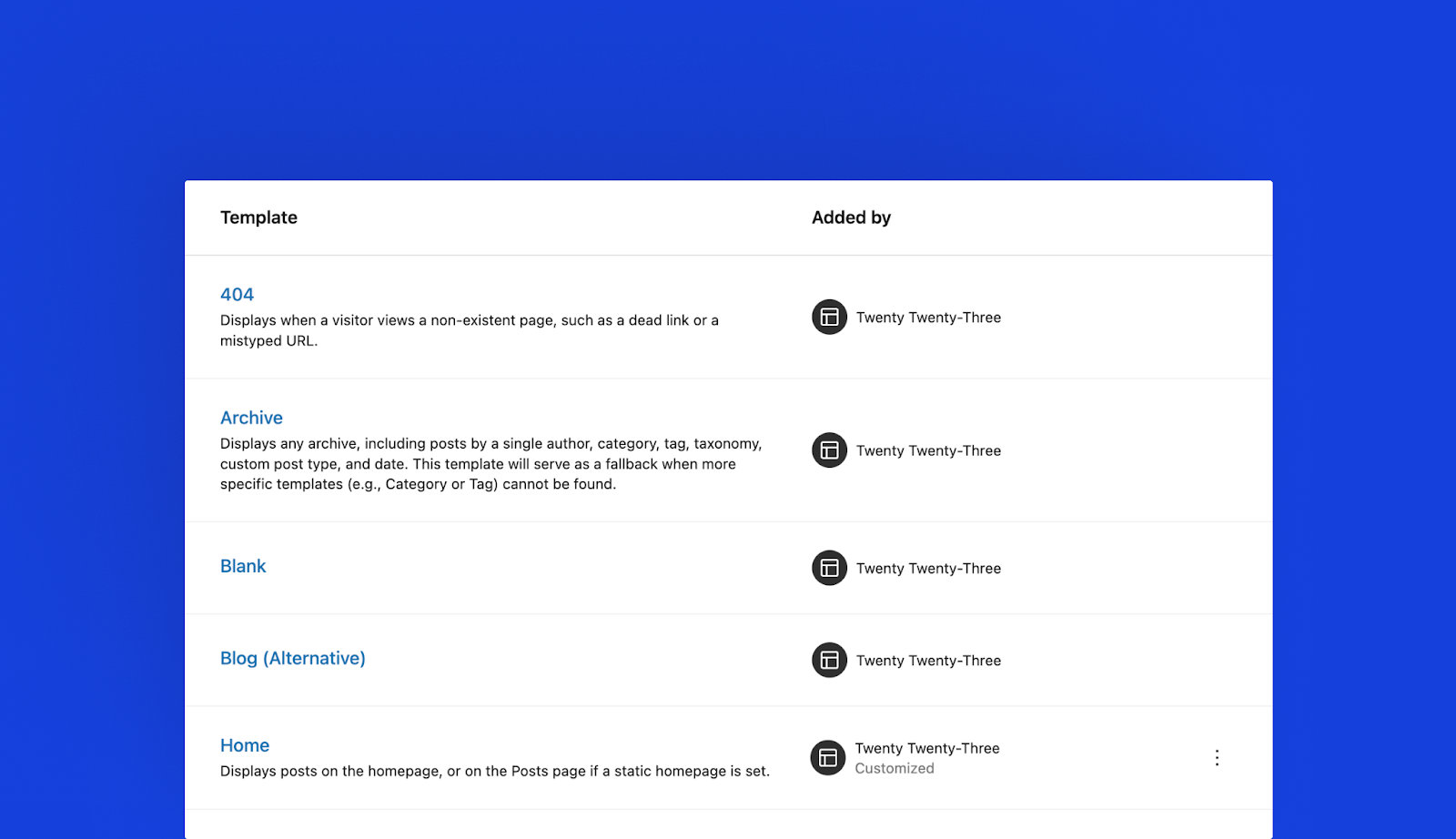
Make plugin-registered templates overriden by themes to fall back to plugin-registered title and description. (64610)
Block Style Variations
Block Styles: Ensure unique classname generation for variations. (64511)
Distraction Free
Make Distraction Free not conditional on viewport width. (63949)
Media
Limit the max width of image to its container size. (63341)
AccessibilityAccessibilityAccessibility (commonly shortened to a11y) refers to the design of products, devices, services, or environments for people with disabilities. The concept of accessible design ensures both โdirect accessโ (i.e. unassisted) and โindirect accessโ meaning compatibility with a personโs assistive technology (for example, computer screen readers). (https://en.wikipedia.org/wiki/Accessibility)
Components
AlignmentMatrixControl: Simplify styles and markup. (64827)
TimePicker: Use ToggleGroupControl for AM/PM toggle. (64800)
Block Editor
Layout content and wide width controls: Remove confusing icon and clarify labels. (64891)
Font Library
Font Library Modal: Group font variations as a list. (64029)
Post Editor
Fix the post summary Status toggle button accessibility. (63988)
Performance
Core Data: Avoid loops in โregistry.batchโ calls. (64955)
Core data: Performance: Fix receive user permissions. (64894)
Reusable blocks: Fix performance of __experimentalGetAllowedPatterns. (64871)
Site Editor
Add โOPTIONS /pageโ to preloaded paths. (64890)
Editor: Donโt use selector shortcuts for the Site data. (64884)
Interactivity API
Prevent calling proxifyContext with context proxies inside wp-context. (65090)
Block Library
Media & Text: Donโt use background-image. (64981)
Post Editor
Editor: Remove create template permission check in โVisualEditorโ. (64905)
Block Editor
Inserter: Use lighter grammar parse to check allowed status. (64902)
Patterns
Shuffle: Donโt call โ__experimentalGetAllowedPatternsโ for every block. (64736)
Corrected HTMLHTMLHyperText Markup Language. The semantic scripting language primarily used for outputting content in web browsers. Syntax for Closing Tags in api-reference.md file. (64778)
DataViews docs: Fix typo in direction values. (64973)
DataViews: Add story about combining fields. (64984)
[Docs]: Update Usage Example for block variation picker: Fix Import from Wrong Package. (55555)
Code Quality
Button: Add lint rule for 40px size prop usage. (64835)
Dataviews filter: Move resetValueOnSelect prop to combobox item. (64852)
Rename refs to fix tons of โMutating a valueโ errors in reactReactReact is a JavaScript library that makes it easy to reason about, construct, and maintain stateless and stateful user interfaces.
https://reactjs.org-compiler. (64718)
Rich text: Add comment on placeholder approach. (64945)
Typography: BackportbackportA port is when code from one branch (or trunk) is merged into another branch or trunk. Some changes in WordPress point releases are the result of backporting code from trunk to the release branch. comment changes only. (64859)
UnitControl: Add lint rule for 40px size prop usage. (64520)
UnitControl: Move to stricter lint rule for 40px size adherence. (65017)
Use rectIntersect instead of a custom argument to rectUnion. (64855)
Site Editor
Add Custom Template modal: Do not use Composite store. (65044)
Video Block: Remove custom CSS code for placeholder style. (64861)
Global Styles
Allow referenced zero value and simplify getValueFromObjectPath calls. (64836)
Navigator: Replace deprecated NavigatorToParentButton with NavigatorBackButton. (64775)
Block Directory
Downloadable Block List: Do not use composite store. (65038)
Design Tools
Color panel hook: Rename to remove ambiguity. (64993)
Tools
Add remaining i18ni18nInternationalization, or the act of writing and preparing code to be fully translatable into other languages. Also see localization. Often written with a lowercase i so it is not confused with a lowercase L or the numeral 1. Often an acquired skill. rules to recommended ESLint ruleset. (64710)
Scripts: Added chunk filename in webpack configuration to avoid reading stale files. (58176)
Scripts: Import CSS files before optimization. (61121)
Nextย major releasemajor releaseA release, identified by the first two numbers (3.6), which is the focus of a full release cycle and feature development. WordPress uses decimaling count for major release versions, so 2.8, 2.9, 3.0, and 3.1 are sequential and comparable in scope.: 6.7
We are currently in theย WordPress 6.7 release cycle. WordPress 6.7 BetaBetaA pre-release of software that is given out to a large group of users to trial under real conditions. Beta versions have gone through alpha testing in-house and are generally fairly close in look, feel and function to the final product; however, design changes often occur as part of the process. 1 is scheduled for Tuesday, October 1.ย The Road Map postย was recently published.
Next minor releaseMinor ReleaseA set of releases or versions having the same minor version number may be collectively referred to as .x , for example version 5.2.x to refer to versions 5.2, 5.2.1, 5.2.3, and all other versions in the 5.2 (five dot two) branch of that software. Minor Releases often make improvements to existing features and functionality.: 6.6.2
The next maintenance release will beย WordPress 6.6.2. RC1 is scheduled for Sept 4, and the full release is planned for Sept 10. Seeย the Trac milestoneย for the release.
Next GutenbergGutenbergThe Gutenberg project is the new Editor Interface for WordPress. The editor improves the process and experience of creating new content, making writing rich content much simpler. It uses โblocksโ to add richness rather than shortcodes, custom HTML etc.
https://wordpress.org/gutenberg/ release: 19.2
The next Gutenberg release will beย 19.2, scheduled for September 11.
Discussion
When discussing WordPress 6.7, we highlighted that @joen has listed some items that could use some help here, and @noisysocks reminded us that itโs always worth checking the Editor tasks board, especially items in the โTodoโ and โNeeds reviewโ columns.
@noisysocks confirmed that the last Gutenberg RCrelease candidateOne of the final stages in the version release cycle, this version signals the potential to be a final release to the public. Also see alpha (beta). before the feature freeze is September 18, and these are the biggest items to keep an eye on:
Most presets are now part of the theme, and work is being done on the different templates and patterns. The repository now has priority labels to indicate the urgency of specific issues and pull requests.
Over 20 contributors have participated so far, and over 60 open issues are in theย GitHubGitHubGitHub is a website that offers online implementation of git repositories that can easily be shared, copied and modified by other developers. Public repositories are free to host, private repositories require a paid subscription. GitHub introduced the concept of the โpull requestโ where code changes done in branches by contributors can be reviewed and discussed before being merged by the repository owner. https://github.com/ย repository. Many are related to blockBlockBlock is the abstract term used to describe units of markup that, composed together, form the content or layout of a webpage using the WordPress editor. The idea combines concepts of what in the past may have achieved with shortcodes, custom HTML, and embed discovery into a single consistent API and user experience. patterns, and the ones with the โNeed Devโ label are ready to be worked on. https://github.com/WordPress/twentytwentyfive/issues
A decision was made not to use domains or brands in graphic elements or patterns. More about that discussion and decisionย here. There were also conversations on how to improve the process of getting the images from the Figma file to add them to the theme, which resulted in hosting the images in a public directory.
Priorities
With the different presets already in the theme, contributors are ready to start working on the different theme styles. Next, the alternative templates for photo blogblog(versus network, site), complex blog and personal blog.
At the same time, work needs to be completed on block patterns to be used in the creation of other layouts, such as landing pages.
Open floor
@joen mentioned that thereโs a good list of Gutenberg-related issues to the theme development, created by @poena, and that heโd be willing to help expedite those.
@beafialho asked how to proceed with implementing templates, when parts are still being discussed or there are independent issues to work on. The conclusion was that as long as thereโs communication on why there are things that are not being fully implemented according to the design, and there are links to the other issues we can move forward to expedite things.
@beafialho also asked about creating GitHub issues vs. opening PRs directly when she finds issues with the implementation. The idea is that if the issues found are quick to fix, a PR could be the best way to expedite things. If the issues found are related to bigger changes, then creating GitHub issues would be the best way to proceed. As it can open up the game for contributors to work on those, and itโll keep track of the progress and what happened.
Twenty Twenty-Five embodies ultimate flexibility and adaptability, showcasing the many ways WordPress enables people to tell their stories with many patterns and styles to choose from. The glimpses of natural beauty and ancestry woven into the theme evoke ideas of impermanence, the passage of time, and continuous evolution.
The demo content imagery, all from the Public Domain, carries a poetic, universal, and ubiquitous tone that complements the coreCoreCore is the set of software required to run WordPress. The Core Development Team builds WordPress. concept. There was an opportunity to visually lean into a positive tone to bring softness, lightness, and inspiration through its aesthetic.
Patterns
Structurally, Twenty Twenty-Five offers a robust set of patterns, promoting interoperability and enabling users to compose intentional pages quickly. A broad range of patterns was designed for categories such as services, about, landing pages, products, calls to actions, events, and others.
Styles
Given the themeโs global use, high-quality and comprehensive fonts that support multiple languages have been considered from the first conceptual steps of the design. Furthermore, weโre refining a set of diverse color palettes to be bundled within the theme as style variations.
Templates
Twenty Twenty-Five also features a versatile set of blogblog(versus network, site)templates: text-centric blogs with sidebars, photo blogs that highlight featured images, and more complex blogs with diverse content. Twenty Twenty-Five will be fully compatible with the Site Editor and will use many of the new design tools like the Grid blockBlockBlock is the abstract term used to describe units of markup that, composed together, form the content or layout of a webpage using the WordPress editor. The idea combines concepts of what in the past may have achieved with shortcodes, custom HTML, and embed discovery into a single consistent API and user experience. and Pattern/Section Styles.
Personal Blog (Default)
In keeping with the idea of simplicity, the personal blog tendency is to lean on a default template that just works, whether you want to write a post with a title and featured imageFeatured imageA featured image is the main image used on your blog archive page and is pulled when the post or page is shared on social media. The image can be used to display in widget areas on your site or in a summary list of posts. or not, and showing all the postโs content out-of-the-box, instead of just excerpts.
Photo Blog (Alternative)
The alternative โphoto blogโ templates tailored primarily for photography or portfolios lean on an image-heavy approach, with interesting layouts that can be used for a variety of purposes.
Complex Blog (Alternative)
Lastly, the set of complex blog alternative templates would be more suitable for websites with greater complexity in content. Some of these templates, with more variety in type scales and more opinionated designs can also appeal to different audiences.
Development
As part of the 6.7 release, Carolina Nymark (@poena) and Juanfra Aldasoro (@juanfra) are leading development while Beatriz Fialho (@beafialho) is leading design. If youโre interested in contributing, make sure youโre following this blog; we look forward to your involvement and support throughout the process.ย
The Figma file is the design source of truth. Comments in the main file are open, and anyone should feel free to duplicate the Figma to their drafts and remix. Both of these actions are free, whereas every edit access is paid and therefore reserved.
Theme development will happen on the Twenty Twenty-Five GitHub repository. You can contribute by submitting and reviewing pull requests or opening new issues and, as usual, once the theme is stable, it will be merged into Core and the GitHubGitHubGitHub is a website that offers online implementation of git repositories that can easily be shared, copied and modified by other developers. Public repositories are free to host, private repositories require a paid subscription. GitHub introduced the concept of the โpull requestโ where code changes done in branches by contributors can be reviewed and discussed before being merged by the repository owner. https://github.com/ repository will be archived.
Starting on Wednesday August 21st at 3:00 PM UTC , there will be weekly Slack meetings in #core-themes to coordinate development of the theme. Agenda notes will be posted before meetings and summaries posted after the meeting.
Learn more
For information about previous default themes, read the following posts:
โWhatโs new in GutenbergGutenbergThe Gutenberg project is the new Editor Interface for WordPress. The editor improves the process and experience of creating new content, making writing rich content much simpler. It uses โblocksโ to add richness rather than shortcodes, custom HTML etc.
https://wordpress.org/gutenberg/โฆโ posts (labeled with the #gutenberg-new tag) are posted biweekly following every Gutenberg release, showcasing new features included in each release. As a reminder, hereโs an overview of different ways to keep up with Gutenberg and the Editor.
This release introduces several new features to Data Views. For starters, you can customize the column order in table views (63416) and adjust the density of grid views (63367).
The Pages list views also get some love, as it now displays the authorโs avatarAvatarAn avatar is an image or illustration that specifically refers to a character that represents an online user. Itโs usually a square box that appears next to the userโs name. (63309) next to the publication status.
If you like these visual hints next to the page titles, you will love to hear that table views now support displaying combined fields (63236), enabling things like displaying page thumbnails next to the page title in future releases.
Finally, if you really like tinkering with early features, try out the new experimental Quick Edit for Data Views (63600). To do so, remember to enable the experiment in the Gutenberg settings first!
Consolidating design tools across blocks
In a recurring effort to provide design tool consistency across blocks (43241), Gutenberg 18.9 brings border control support to the Gallery, Buttons (which also gets color and padding support), Heading, Paragraph, Quote (spacing support, too) blocks, Social Links, and Term Description blocks. Similarly, the Image and Search blocks get margin support.
Improved usability in editing and applying font size presets
Gutenberg 18.9 iterates both using and editing font presets in global styles. The Global Styles interface now allows user-friendly editing of font size presets (63057). Moreover, these font presets and color presets can now be selected on the Global Styles sidebarSidebarA sidebar in WordPress is referred to a widget-ready area used by WordPress themes to display information that is not a part of the main content. It is not always a vertical column on the side. It can be a horizontal rectangle below or above the content area, footer, header, or any where in the theme. under โBrowse stylesโ, bringing consistency to the interface and aligning with the left sidebar Styles menu (63173).
You must be logged in to post a comment.